

June 20, 2026 / Dr. Hussain Kotawala & Team
AI / .mdChildhood Fever: Causes, Care & Warning Signs | Pediatric Guide
Few things rattle a parent like placing a hand on their child's forehead and feeling that unmistakable warmth. Fever is one of the most common reasons parents bring their children to a doctor — and also one of the most misunderstood. The good news: in most cases, fever itself is not dangerous. It's a sign that your child's immune system is doing its job.
This guide covers what causes fever in children, how to manage it safely at home, and the specific warning signs that mean it's time to see a doctor.
What Counts as Fever in Children?
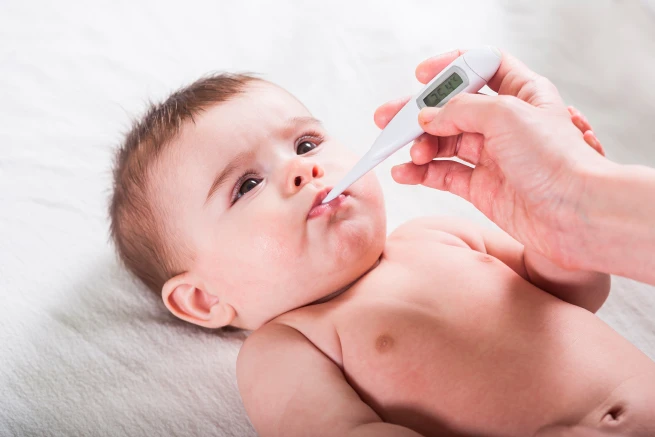
A normal body temperature varies slightly by child and by the method used to measure it, but generally, temperature ranges fall into these categories:
- Normal temperature — Around 97°F–99°F (36.1°C–37.2°C)
- Low-grade fever — 100.4°F–102.2°F (38°C–39°C)
- High-grade fever — Above 102.2°F (39°C)
- Very high fever — Above 104°F (40°C) — needs prompt medical attention
Many parents ask, "Is 102°F fever in a 2-year-old high?" It falls into the high-grade range and warrants closer observation and fever-reducing measures, but it is not automatically an emergency unless accompanied by other warning signs.
Common Causes of Fever in Children
Understanding the origin of a fever helps guide the treatment approach:
- Viral infections — Colds, flu, hand-foot-mouth disease, gastroenteritis, and seasonal viral fevers account for the vast majority of childhood fevers.
- Bacterial infections — UTIs, strep throat, ear infections, and pneumonia can cause persistent fever requiring antibiotic treatment.
- Post-vaccination fever — A mild, short-lived fever after immunization is a normal immune response, not an active infection.
- Teething — May cause a very mild temperature elevation, but teething never causes a true high-grade fever.
- Heat exhaustion — Prolonged exposure to hot climates can raise body temperature, especially in infants and toddlers.
- Seasonal fevers in India — Dengue, chikungunya, malaria, and typhoid are common during monsoon season and require medical testing if fever lasts over 2–3 days.
Viral vs. Bacterial Fever — How to Tell the Difference
Only a doctor can reliably distinguish between the two through examination, but here are the key general differences:
| Feature | Viral Fever | Bacterial Fever |
|---|---|---|
| Onset | Often gradual, with cold/cough symptoms | Can be sudden, sometimes very high |
| Duration | Usually resolves in 3–5 days | May persist or worsen without treatment |
| Other symptoms | Runny nose, mild cough, body aches | Localized pain (ear, throat, abdomen), pus, severe symptoms |
| Antibiotics Response | No improvement (antibiotics do not treat viruses) | Improves within 24–48 hours of correct antibiotic |
How to Reduce Fever Without Medicine
- Hydration first — Offer water, ORS (oral rehydration solution), coconut water, or breastmilk/formula frequently.
- Light clothing — Dress your child in lightweight, breathable clothing rather than bundling them up to avoid trapping heat.
- Comfortable room temperature — Keep the room cool and well-ventilated, but avoid direct cold drafts or AC blowing directly on the child.
- Lukewarm sponge bath — Wipe the body with lukewarm (not cold) water to bring the temperature down. Never use cold water or alcohol.
When Medication Is Appropriate
- Comfort over numbers — Focus on how the child feels rather than just the number on the thermometer.
- Paracetamol Dosage — Dosing is based on the child's weight, not age alone. Use the dosing syringe/cup provided.
- Never give aspirin — Giving aspirin to children with fever carries a risk of Reye's syndrome, which can be severe.
- Avoid combining medications — Do not alternate paracetamol and ibuprofen without explicit pediatric advice.
When Is Fever an Emergency? Warning Signs to Watch For
Any temperature of 100.4°F (38°C) or higher in an infant under 3 months needs immediate medical evaluation, as well as any fever above 104°F (40°C) at any age.
Seek urgent care if your child is experiencing rapid breathing, chest indrawing, persistent vomiting, or showing signs of dehydration (no urine for 8+ hours, dry mouth, sunken eyes, or lack of tears when crying).
Go to the emergency room immediately if your child has a seizure (febrile convulsion), stiff neck, severe headache, extreme irritability, sensitivity to light, or unusual drowsiness/difficulty waking.
Consult your doctor immediately if your child develops a rash that does not fade when pressed (non-blanching rash), or if the fever lasts for more than 3 days without improvement.
Patient Stories
When to Consult a Pediatric Surgeon
If you notice anything unusual, it’s always better to get an expert opinion early. Consult a pediatric surgeon if the testis is not visible after 6 months, you are unsure about your child’s condition, or there is swelling.
Dr. Hussain Kotawala: With 15+ years of experience overall and 5000+ successful pediatric surgeries, specializes in treating conditions like undescended testis using advanced, minimally invasive, and child-friendly techniques for a safe and completely precise recovery.
Book a Visit
Topic Insights

Written By
Dr. Hussain Kotawala & TeamPediatric Surgeon & Specialist
Share Article